Ronin Network Explained: The Blockchain Powering Axie, Pixels, and Fishing Frenzy
 14 min read
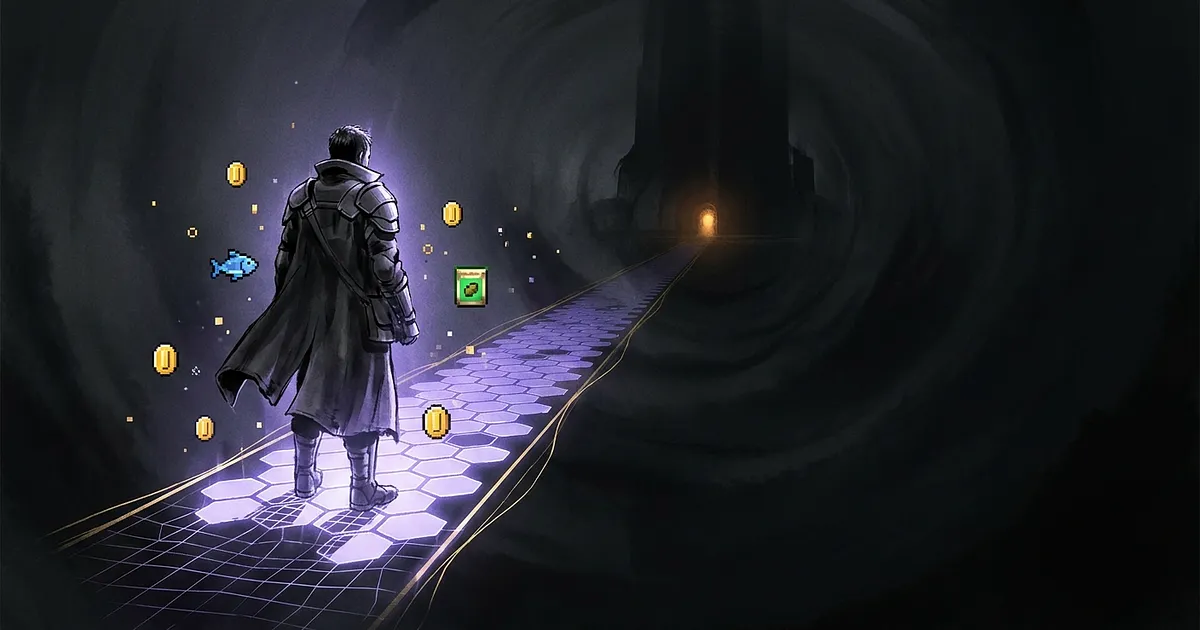
If you have ever played Axie Infinity, farmed a plot in Pixels, or killed twenty minutes on a mobile fishing game called Fishing Frenzy, you have already used the Ronin blockchain. You probably never once thought about it. Which is, honestly, the whole point of infrastructure that works.
That last line is the reason this post exists. Go searching for "what is Ronin" today and you get CoinGecko's explainer from June 2024 and OKX's from December 2025, both written before the migration, both still describing the Ronin sidechain as sitting next to Ethereum rather than a chain settling on it. Neither is lying. Both are stale.
So here is the current version, for someone who has heard the name and wants the actual shape of the thing.
What the Ronin blockchain actually is
Sky Mavis shipped Ronin in February 2021 for a deeply unglamorous reason: Axie Infinity was choking on Ethereum gas. Every breed, every marketplace listing, every battle settlement was an on-chain transaction, and at 2021 Ethereum prices that math simply did not work for a game whose players were, in a lot of cases, playing to make rent.
So they built their own chain. EVM-compatible, so all the Ethereum tooling still works. Tuned for game throughput rather than for DeFi or for storing wealth.
That focus is genuinely unusual. Most chains say they are "for gaming" in a pitch deck and then spend their block space on perpetuals. Ronin has been running actual games with actual retail players for four years, which is a longer track record than most of the chains claiming the same lane.
What "built for games" means in practice is boring and specific. Transactions have to cost close to nothing, because a player minting a fishing rod is not going to pay real money in gas for it. They have to confirm fast enough that a battle result does not hang. Onboarding cannot start with a twelve-word seed phrase, because most people who want to farm turnips are not going to write one down. And the whole thing has to stay standing on a launch weekend. Ronin has spent four years chipping away at all of that, with mixed results and one catastrophic setback.
The scale is real, as far as I can tell, provided you read the numbers with their dates attached. Ronin's own 2025 year in review, published December 29, 2025, put the network at over 5 million active users and more than 250 million transactions across that full calendar year. That is a yearly total, not a daily one, and I am flagging it on purpose. A stale "2 million daily active users" figure from July 2024 is still floating around several evergreen crypto explainers as though it were current. It is not.
For a current number instead: independent rollup researcher L2BEAT put Ronin's total value secured at $213.55M as of September 3, 2026.
Sidechain vs Layer 2: what changed in May 2026
Here is the distinction, without the whitepaper voice.
A sidechain is its own blockchain. It runs its own consensus, with its own validators paying for its own security, and it connects to a parent chain like Ethereum through a bridge. If those validators get compromised, Ethereum cannot help you. Ethereum does not know or care what the sidechain's validators agreed to.
A Layer 2 settles on the chain underneath it. Transactions get batched and proven back to Ethereum, so the security assumption stops being "trust this validator set" and starts being "trust Ethereum, plus the proof system."
Ronin was the first thing for five years. As of May 12, 2026, it is the second, better known now as Ronin Layer 2. Ronin's own documentation now says outright that in 2026 Ronin returned to Ethereum as an L2, keeping the throughput that justified leaving in the first place while inheriting Ethereum's security underneath.
The cutover itself was a hard fork at block 55,577,490, with roughly ten hours of full network downtime while it ran, per Decrypt. Everything paused. Swaps, trades, in-game actions, all of it. If you want the blow-by-blow of that migration and what it did to Axie and Pixels players specifically, DegenLoot already wrote the deep dive on exactly that, and there is no sense re-running it here.
The part worth carrying with you is the honest caveat. L2BEAT classifies Ronin as an OP Stack Optimium, not a full rollup, because it uses EigenDA for data availability rather than posting transaction data to Ethereum itself. It also rates Ronin at Stage 0 decentralisation maturity, while explicitly noting that "these stages do not reflect project security." Stage 0 is a maturity label, not a red flag. But anyone telling you the Ronin blockchain is now exactly as safe as Ethereum is skipping a step.
Money changed too. RON's annual token inflation dropped from over 20% to under 1% as part of the migration, again per Decrypt, with the freed-up rewards redirected into a program called Proof of Distribution that pays roughly 416,000 RON a month to teams actually building games people play. Season 1 results, reported August 2026, sent the largest single share to Axie Infinity.
Whether any of that moves the needle on player counts is a separate question, and my read is that it probably does not on its own. Cheaper, safer infrastructure is necessary. It has never once been sufficient.
The games that actually matter on the Ronin blockchain
There are dozens of titles on Ronin and a directory listing all of them helps nobody. These are the ones a normal person has actually heard of.
Axie Infinity, and which Axie you mean
"Axie Infinity" now covers two different products, which trips people up constantly.
Axie Infinity: Origins is the live flagship: a mobile-first auto-battler, currently on its latest season, and the thing Sky Mavis is actively shipping updates to.
Axie Infinity Classic is the 2018-era original, and after September 10, 2026 it moves to community governance rather than official development, with eventual Community Treasury oversight, according to BitPinas. A Sky Mavis executive framed it as a handover, not a shutdown. Development staff are being reallocated to Origins and to newer titles including Terrariums and an in-development MMO called Atia's Legacy.
Is that a bad sign? Depends entirely on whether you think a studio should keep two engineers babysitting an eight-year-old build forever. I lean no. And if you're still weighing whether Axie Infinity is still worth playing in 2026, DegenLoot has already run the numbers.
Pixels
Pixels is the one that quietly proved Ronin was not a one-game chain. Built on Ronin, it is a free-to-play, Stardew Valley-flavoured farming and social game: you gather and grow resources across rarity tiers, raise animals, run tasks, trade with other players, and earn $PIXEL and NFT rewards along the way. $PIXEL itself gets used for NFT minting, VIP membership, guild access, and eventually community treasury governance.
The stat everyone quotes is 1.6 million daily active users, and it is real, but date it properly: that was Pixels' peak in early 2024, per Yellow.com's May 2026 research, and it beat Axie's own historical high. It is a "this happened" number, not a "this is happening" number.
Fishing Frenzy
And then there is the cozy one. Fishing Frenzy is a skill-based mobile fishing RPG that came over from Base to Ronin in stages across January to March 2025. You cast, you reel, you cook your catch into sashimi for an in-game currency called Pearls. Rods, catches, treasure chests, and a fair bit else can be minted as tradeable NFTs on the Ronin Market. There is a leaderboard, a Frenzy Points reward system, purchasable passes, and a $FISH token running a "Proof of Contribution" model with a separate non-tradable $xFISH used for internal reward accounting.
Ronin's own blog reported over 450,000 players on the Ronin version within weeks of launch. Its 2025 Season 2 alone generated more than 1.8 million transactions from 47,500 wallets, per that same year-in-review.
Worth saying plainly, since it is a project's own blog: those are Ronin's numbers about Ronin. Directionally believable, not independently audited.
Is the Ronin blockchain safe in 2026?
Is Ronin safe? You cannot answer that without the hack, so: in March 2022, attackers compromised five of nine validator keys and drained $625 million from the Ronin Bridge, still one of the largest crypto exploits on record. The US Treasury tied it to North Korea's Lazarus Group on April 14, 2022. DegenLoot has the full story here, including the reimbursement and the recovery that trickled in afterwards, so this post is not going to re-narrate it.
What matters for "is it safe now" is that two separate hardening steps followed, and a lot of coverage smashes them into one event. They are not one event.
First, the bridge itself got rebuilt on Chainlink's CCIP, replacing the validator-multisig design that failed in 2022. Announced October 2024, live that December, and the full $450M+ migration across 12 assets completed on April 25, 2025 per Ronin's own blog. Second, a full year later, the whole network moved onto Ethereum as a Layer 2. Different problem, different fix.
Sky Mavis co-founder Jeffrey "Jihoz" Zirlin framed the L2 move as more than a tech upgrade, explaining that operating under Ethereum's security umbrella "demonstrates a commitment to safety, transparency, and long-term sustainability." Read that as a trust-rebuilding statement, because that is what it is, and it is fair enough coming from a team that got hit for $625M.
Two kinds of risk get conflated constantly here, and they shouldn't be. Bridge risk is the one that produced 2022, and it is the one both fixes address. Smart-contract risk inside an individual game is a completely different animal, and no amount of Layer-2 migration touches it. A rug pull in a Ronin game is still a rug pull, and the warning signs don't change chain to chain.
So is it safe? Safer. Meaningfully, structurally safer than the thing that got drained in 2022. Still Stage 0 on L2BEAT's maturity scale, still a chain rather than a bank, still crypto, and still holding a lot of value somebody out there would very much like to steal. Nobody gets to tell you it is risk-free.
Getting started on Ronin
A few pieces of plumbing sit underneath the Ronin blockchain, and you will meet all of them in the first ten minutes.
The wallet. There are two, and the difference matters more than it looks. Ronin Wallet is the traditional one: browser extension or mobile app, seed phrase, full self-custody, exactly what a crypto-native reader expects. Ronin Stash is the newer option, called Ronin Waypoint until June 2026, and it is a keyless embedded wallet built on Privy, so you sign in with an email or a social account and never see a seed phrase. That is part of a wider shift away from seed phrases across web3 games generally, not just Ronin. Most newcomers land on Stash now. Existing Waypoint users had an asset migration deadline of September 30, 2026, already pushed back once from September 16.
The bridge. The Ronin Bridge is how assets move between Ethereum or Base and Ronin, and it is the CCIP-secured version now, not the 2022 one. If you are only playing free-to-play titles like Pixels, you may genuinely never need it.
The marketplace. Ronin Market at marketplace.roninchain.com is the network's own NFT venue, it needs a Ronin-compatible wallet, and it lists both Axie collections and everything else. Fishing rods, land, the lot.
There is a native DEX too, called Katana, but that is a whole other post and I am not going to half-explain it here.
Bottom line
The Ronin blockchain took the worst hit in the category, spent four years rebuilding, and then handed its security assumptions back to Ethereum. It is not the hype machine it was in 2021, and anyone telling you it's "back" is usually selling something. Call it what it actually is: mature, honest about its own maturity rating, and still shipping games people actually play.
If the part that stuck with you was "I would rather check the math myself than trust a validator set," Stellarch comes at that idea from a different angle. It is a browser-based trading-card game on Hive running on deterministic seeded RNG, so a match result is verifiable from its seed rather than something you take on faith, and you can start free with an email signup, no wallet and no download. It is in closed alpha right now, so the realistic move is joining the waitlist rather than expecting to log in tonight. Fair warning: that also means it is a great deal smaller than anything on Ronin.
Frequently Asked Questions
What is Ronin Network and how does it work?
Ronin is a blockchain built by Sky Mavis, the studio behind Axie Infinity, and it exists specifically to run games rather than general finance. It is EVM-compatible, so Ethereum tooling works on it. Since May 12, 2026 it settles on Ethereum as a Layer 2 built on the OP Stack, which means transactions are proven back to Ethereum instead of relying on Ronin's own validator set alone.
Is Ronin a Layer 1 or Layer 2 blockchain?
Layer 2, as of May 12, 2026. Before that it was an independent Ethereum sidechain, and plenty of still-live guides say so, including CoinGecko's explainer from June 2024 and OKX's from December 2025. L2BEAT classifies it more precisely as an Optimium: an OP Stack chain that keeps data availability off Ethereum, on EigenDA, rather than posting full transaction data to Ethereum itself.
What games use the Ronin blockchain?
Axie Infinity: Origins is the flagship, with Axie Infinity Classic moving to community governance after September 10, 2026. Pixels is the big free-to-play farming and social game. Fishing Frenzy is a mobile fishing RPG that migrated from Base in 2025. Dozens more exist, plus a native DEX called Katana, but those are the titles most people actually recognise.
Is Ronin Network safe to use after the 2022 hack?
Safer than it was, and that is a real answer rather than a dodge. The 2022 exploit hit the old bridge's validator multisig. That bridge was rebuilt on Chainlink CCIP by April 2025, and the network moved under Ethereum's security in May 2026. L2BEAT still rates Ronin at Stage 0 decentralisation maturity, while noting stage ratings are not a security verdict. Nothing here is risk-free.
What is the difference between a sidechain and a Layer 2?
A sidechain runs its own consensus with its own validators and connects to a parent chain through a bridge, so its security is only as strong as that validator set. A Layer 2 inherits security from the chain underneath it by proving its transactions there. Ronin's 2022 hack is the textbook illustration: attackers compromised validator keys, which is a failure mode a sidechain has and a rollup does not have in the same shape.
Do I need a Ronin Wallet to play Axie Infinity or Pixels?
You need a Ronin-compatible wallet, but not necessarily the seed-phrase kind. Ronin Wallet is the classic self-custody option. Ronin Stash, called Ronin Waypoint until June 2026, is a keyless wallet you open with an email or social login, and that is what most newcomers use now. Either works for Axie Infinity and Pixels.
Sources
- 2025 year in review blog.roninchain.com
- L2BEAT l2beat.com
- now says outright that in 2026 Ronin returned to Ethereum as an L2 docs.roninchain.com
- per Decrypt decrypt.co
- according to BitPinas bitpinas.com
- Built on Ronin coinmarketcap.com
- Yellow.com's May 2026 research yellow.com
- Fishing Frenzy blog.roninchain.com
- tied it to North Korea's Lazarus Group coindesk.com
- the full $450M+ migration across 12 assets completed on April 25, 2025 blog.roninchain.com
- explaining theblock.co
- joining the waitlist stellarch.io