The NFT Checklist: 5 Questions Before You Buy Your First Card or In-Game Item
 3 min read
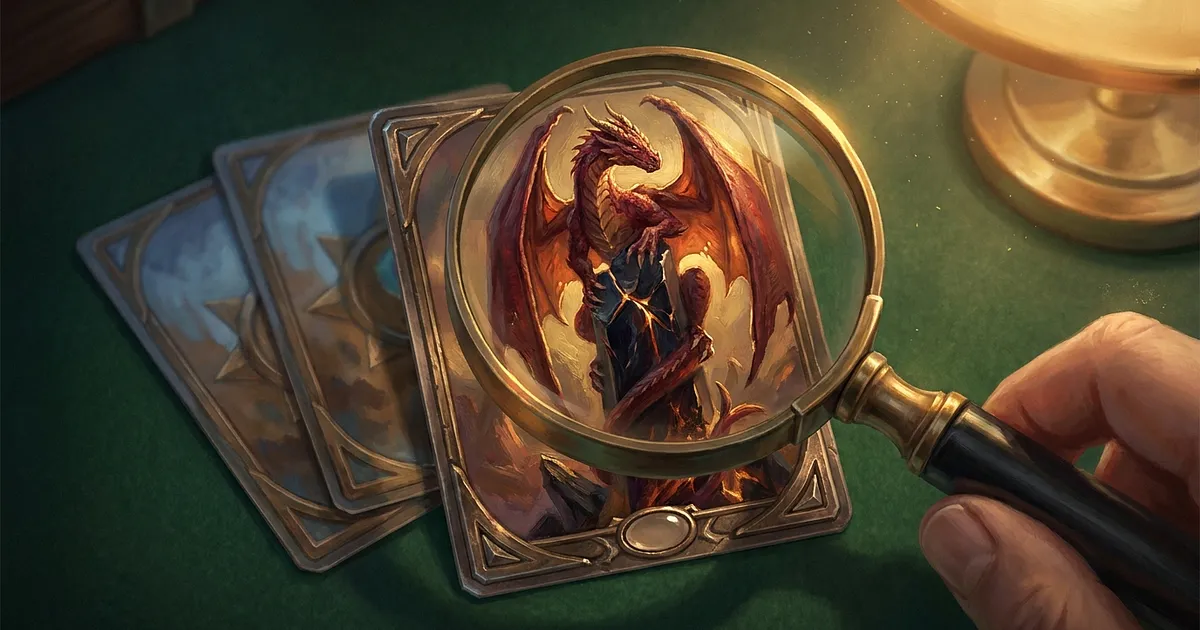
Gaming NFTs are having a rough run, part of the wider web3 gaming crash. Category trading volume fell 17% quarter over quarter, per DappRadar's Q3 2025 report, on top of the worst NFT year since 2020. So run this NFT checklist before you ape into a pack. Five questions, ten minutes, and honestly most listings won't survive it.
1. Does the thing actually do something?
An in-game NFT item that exists only to be flipped isn't an item. It's a lottery ticket with art on it. Is the card playable in a live build today, or only in a roadmap quarter?
2. Who buys it back?
Check recent completed sales, not open listings. Listings are what sellers wish for. Sales are what buyers paid. Axie Infinity is why this one matters. Its AXS token fell more than 81% from its all-time high as players walked away. The full timeline of what happened to Axie Infinity.
3. Who's Behind It? The NFT Checklist's Big Red Flag
The FBI's Internet Crime Complaint Center warns that criminals impersonate real NFT teams and push fake "surprise mint" posts to phishing sites. Account age and domain spelling are the cheapest red flags. An academic study of labelled rug-pull collections found 44% cashed out within a week of launch. The other red flags to check before you ape in.
4. What do you actually own?
Almost certainly not the art. As Search Engine Journal explains, an NFT purchase usually transfers the token and a personal-use licence, not copyright, unless the project's terms say otherwise. Gods Unchained clears that bar: its cards trade on marketplaces the studio doesn't control. Most in-game NFT items don't: some card games use soulbound tokens that can't be resold at all.
5. Is the scarcity real, or just theatre?
"Limited supply" means nothing by itself. Allocation does. Splinterlands' first land presale sold out in about 30 seconds, with most of the supply locked into $850-plus bundles ordinary players couldn't reach. Limited? Sure. Fairly distributed? Not really. The full tokenomics checklist before you buy in.
NFT checklist recap:
Works today?
Buys back?
Behind it?
You own it?
Real scarcity?
That's the entire NFT checklist, and most things you're tempted by fail at least two of them, which is exactly why you run it before the wallet popup, not after.
Frequently Asked Questions
Is buying an in-game NFT the same as buying the artwork?
No. You get the token and a personal-use licence, not the copyright.
How do I know if an NFT project is a scam?
The boring signals do most of the work. When were the social accounts created? Is the domain spelled correctly? The FBI's cybercrime unit flags impersonated teams and fake surprise-mint posts as a standard scam playbook.
Are in-game NFT items a good investment?
Treat it as a purchase, not an investment. Gaming NFT trading volume has been falling, and resale depends on new players outpacing sellers.
What is a rug pull, and how fast do they happen?
A rug pull is when a team abandons a project and cashes out shortly after launch, leaving buyers with something untradeable. One academic study of confirmed rug-pull collections found 44% cashed out within a week of launch.
Sources
- per DappRadar's Q3 2025 report dappradar.com
- the worst NFT year since 2020 theblock.co
- fell more than 81% from its all-time high decrypt.co
- FBI's Internet Crime Complaint Center ic3.gov
- 44% cashed out within a week of launch dl.acm.org
- As Search Engine Journal explains searchenginejournal.com
- sold out in about 30 seconds egamers.io