The Web3 Gaming Crash: How a $15 Billion Boom Turned Into a 90% Bust
 9 min read
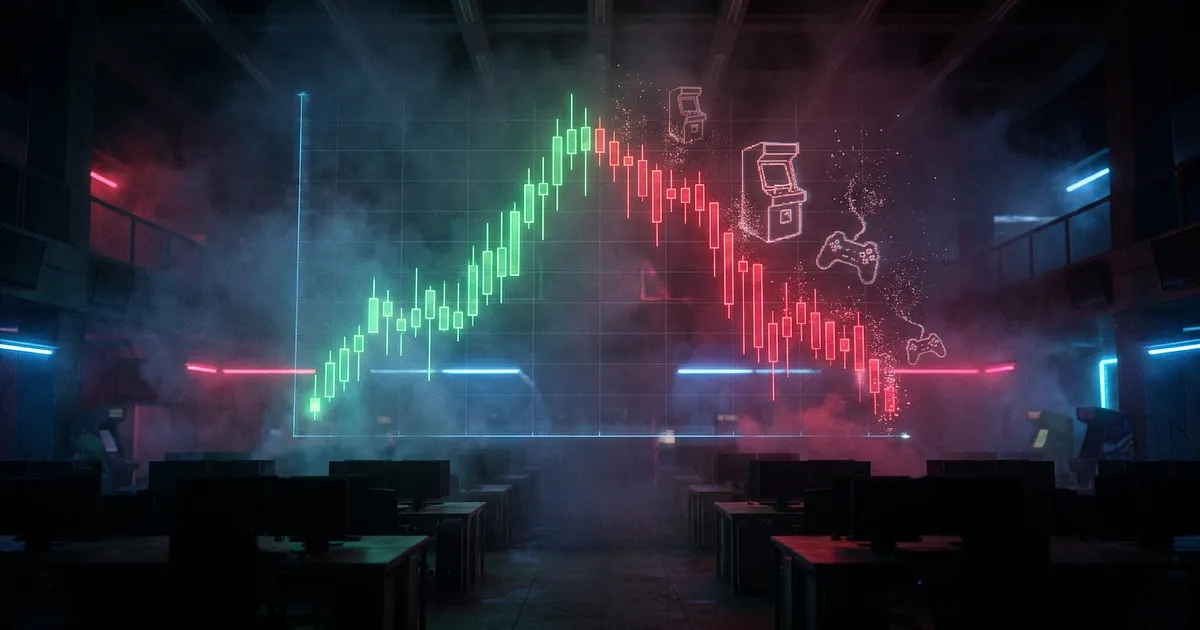
Money was never the problem. That is the part of the web3 gaming crash that still gets me. Billions of dollars poured into blockchain games between 2020 and 2026, and most of it went nowhere. According to a report from crypto research firm Caladan, covered by CoinDesk, more than 90% of the roughly 3,200 web3 games it studied are now effectively dead, after the sector burned through as much as $15 billion chasing a token-driven future almost nobody actually wanted to play.
So how did the space set fifteen billion dollars on fire? Let me walk you through it, because the story is a lot more interesting than "crypto go down."
The boom before the web3 gaming crash
Rewind to late 2021. Axie Infinity was printing headlines about players in the Philippines earning more from a breed-and-battle pet game than from local wages. AXS, Axie's token, hit an all-time high of $164.90 on November 6, 2021. It trades under a dollar today, a drop of more than 99%.
The whole category rode that wave. At the 2022 peak the combined GameFi token market cap sat somewhere in the tens of billions, depending on which tracker you trust and which tokens it counts as "gaming." The number was fuzzy. The mania was not.
And here is the tell everyone ignored at the time. Even at the absolute top, only a tiny slice of actual gamers had ever touched a crypto game. The capital showed up. The players never really did. Venture funds, retail NFT buyers, gaming guilds, tap-to-earn speculators, all of them were building for a demand that was mostly imaginary.
The first crack: the Ronin bridge hack
Five months after that AXS peak, the web3 gaming crash got its first real wound.
In March 2022, hackers linked to North Korea's Lazarus Group drained more than $600 million from the Ronin bridge, the sidechain built specifically to make Axie's transactions cheap enough for play-to-earn to work. At the time it was the largest crypto hack on record.
Sky Mavis eventually made affected users whole. But the damage was never really about the dollars. The bridge existed so ordinary people could move value in and out of a game, and it got emptied by a nation-state hacking crew. If you were a normal player deciding whether to trust your rent money to a "play-to-earn" economy, that was your answer. Trust cracked, and it did not un-crack.
Why play-to-earn was doomed by the math
Here is the mechanism, in plain terms, because most crash coverage skips it.
Play-to-earn tokens paid rewards to existing players. Those rewards had value only if new players kept buying in and creating fresh demand. As long as the crowd kept growing, the flywheel spun and everyone looked like a genius. The moment new sign-ups slowed, reward tokens lost value, so players earned less, so more of them left, which pushed the token down further, which chased away even more players. A death spiral, and a self-reinforcing one.
Nobody needed a bear market to trigger the play-to-earn crash. The structure did that on its own, and that's the part of the web3 gaming crash most coverage skips. As web3 developer Jarrod Watts argues, "blockchains, digital collectables, cryptocurrencies, and true ownership aren't game mechanics." The projects that blew up were the ones that made the token the whole point of playing, then acted surprised when people stopped playing the second the token stopped going up.
Call it what it was. When the reason to log in is a payout funded by the next person logging in, you do not have a game. You have a queue.
The web3 gaming crash's slow bleed
The crypto gaming crash of 2026 was not a single crash day. It was a multi-year grind lower.
Watch the funding line and you can see the air leaving the room. Annual venture funding into web3 gaming fell from roughly $4 billion in 2022 to about $360 million in 2025, a decline of more than 90% in three years. Gaming's slice of total web3 venture capital went from the majority of it to single digits. The smart money did not sit around. It rotated into AI, tokenized real-world assets, and layer-2 plumbing, and left GameFi to bleed.
The wreckage piled up fast. Pixelmon raised around $70 million in an NFT sale in early 2022 and, per the Caladan report, had shipped no public game years later. Hundreds of blockchain games shut down entirely, pushing the web3 games shutdown rate past 90%.
Even the fast-money version of this story played out the same way, just compressed. Telegram's Hamster Kombat, the tap-to-earn wave's biggest name, swelled to roughly 300 million users and then cratered to about 12 million within six months. Same movie, shorter runtime.
Today the entire GameFi token category, every blockchain gaming token combined, carries a market cap of around $3 billion. Down from tens of billions. That is the size of the hole.
What separated the survivors from the corpses
So did the web3 gaming crash kill the category outright? Honestly, no, and anyone telling you the whole idea is discredited is selling doom for clicks.
Gaming is still the biggest on-chain app category by activity, even after all of this. A handful of titles kept growing straight through the bust. And if you line up the ones still standing next to the ones in the ground, a pattern jumps out that is way more useful than another scary stat.
The survivors got two things right. First, most of them were built by teams with real, traditional game-development pedigree, not just crypto-native founders who had never shipped a game people wanted to play for fun. Second, and this is the big one, they treated the blockchain as an ownership and trading layer bolted onto a game that was already worth playing, rather than as the core loop. Off the Grid, from a team with AAA studio roots, is the example people point to most: the web3 bits are optional, the shooter underneath is the product.
Flip that and you get the thesis of the entire postmortem. The dead projects made the chain the game. The living ones made a game, then put a chain under the parts that genuinely benefit from real ownership.
That framing is worth keeping in mind when you size up anything new in the space, including a newer corner of it built around provably-fair mechanics instead of an earnings pitch. Stellarch, for instance, is a browser TCG on Hive where combat runs through a seeded-RNG engine, so any match replays byte-identically from its seed and you can verify the result yourself instead of trusting the operator. It is free to start, no wallet or card purchase needed for a first match, and it leans on that verifiable fairness rather than an earnings pitch. It is still in closed alpha, so this is a join-the-waitlist situation, not a "everyone's playing it" one. But note what the hook is: the game and the trust math, not a token you are promised will moon.
Because that promise, the one about the token that only goes up, is exactly what fifteen billion dollars just finished disproving.
The filter to carry with you
The web3 gaming crash bought the space one very expensive lesson: a token is not a game, and ownership is not gameplay. The projects that survived already knew that. The ones that did not are a graveyard of whitepapers.
If you are still poking around web3 gaming in 2026, that is the filter to carry with you. Ask whether the thing would be worth your time with the chain switched off. If the honest answer is no, you already know how that story ends.
Frequently Asked Questions
What caused the web3 gaming crash?
A mix of things stacked up. Capital flooded in on hype and NFT speculation years ahead of any fun, finished games. The play-to-earn model depended on constant new-player money and collapsed once growth slowed. The March 2022 Ronin bridge hack broke user trust. Then venture funding dried up for years. By 2026 a research report found more than 90% of projects were effectively dead.
Is web3 gaming dead in 2026?
Not dead, but massively shrunk. Around 93% of projects failed and the GameFi token market cap fell from tens of billions to roughly $3 billion. Still, blockchain gaming remains the largest on-chain app category by activity, and specific titles kept growing through the bust. It is a brutal shakeout, not an extinction event.
Why did play-to-earn games collapse?
The economics were unsustainable by design. Reward tokens only held value while new players kept buying in. When sign-ups slowed, tokens dropped, players earned less and left, which pushed tokens lower and drove out more players. That self-reinforcing loop, often called a tokenomics death spiral, plays out regardless of the broader crypto market.
Which web3 games survived the crash?
The survivors share a profile rather than a single name. They tend to be built by teams with traditional game-development experience, and they treat blockchain as an optional ownership and trading layer on a game that is already fun to play, instead of making the token the reason to log in. Titles like Off the Grid are the commonly cited examples of that approach.