Is the Metaverse Dead? The Sandbox and Decentraland's Land Rush, Five Years Later
 9 min read
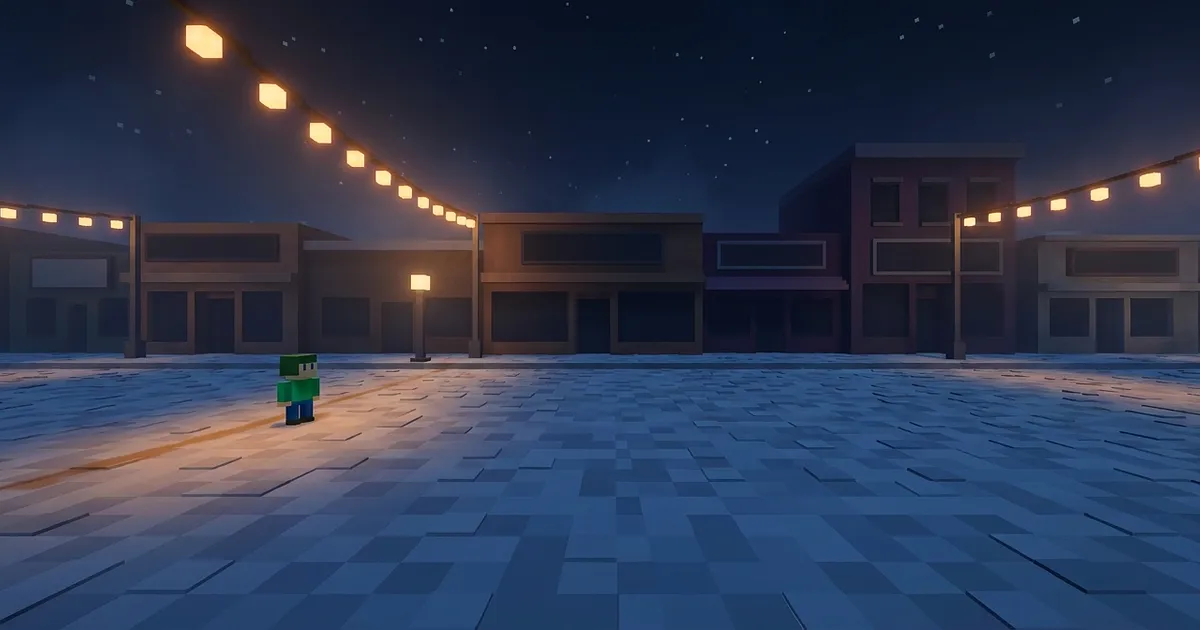
In November 2021, somebody paid about $2.43 million for 116 parcels of pretend real estate, virtual land on a street that doesn't exist. Not a joke setup. It was a record metaverse land sale, covered by Forbes and treated as the start of something.
So when people ask "is the metaverse dead," they usually mean Meta. Horizon Worlds, the headsets, tens of billions written off. Fine. But a second metaverse was running at the same time, the crypto one, where people bought blockchain deeds instead of headsets. That one fell harder, and almost nobody wrote its obituary.
Is the metaverse dead? It died twice, and only one death made the news
Short version: the metaverse isn't dead as software. It's dead as an asset class.
The Sandbox and Decentraland are both still online in 2026. They run events, they ship updates, you can log in free right now. What died was the pitch, the one that said a virtual parcel was scarce digital land with durable value. Floor prices fell somewhere between 89% and 99.8% depending on which parcel you track, and the brands that anchored the whole thesis went quiet.
Two different failures. One shared root: everybody priced attendance that never showed up, the same overcounted-demand story behind Web3 gaming's 90%+ shutdown rate since 2021.
The land rush, when a deed to nothing cost more than a house
Late 2021 was something. Snoop Dogg rebuilt his Diamond Bar mansion inside The Sandbox and threw invite-only parties there, and one buyer paid close to $450,000 to become his virtual neighbor that December. The premise was proximity. Be near the celebrity, flip later.
Then the suits arrived. JPMorgan opened an "Onyx" lounge in Decentraland's Metajuku mall in February 2022, portrait of Jamie Dimon on the wall, plus an 18-page report calling the metaverse a $1 trillion opportunity. HSBC bought Sandbox land the next month. Adidas took parcels too, though its "Into the Metaverse" push drifted toward wearables rather than building on the dirt.
Neither bank has published a word about those installations since roughly 2022. No wind-down, no relaunch, nothing. The silence is the update.
What that land is worth now
Here's where it stops being funny.
According to CoinGecko Research, The Sandbox's average LAND floor fell 95%, from 2.86 ETH at the 2021 peak to 0.13 ETH by 2024. Decentraland's fell 89% over about the same window, 1.73 ETH down to 0.18 ETH.
Averages are polite, though. A CryptoSlate analysis repriced the famous named buys one by one:
| Parcel | Paid | Roughly worth now |
|---|---|---|
| Metaverse Group's Decentraland Fashion Street estate (Nov 2021) | $2.4M | ~$8,929 |
| Republic Realm's 259 Decentraland parcels (Jun 2021) | $913,228 | ~$19,935 |
| Republic Realm's Sandbox estate (late 2021) | $4.3M | ~$65,583 |
| The plot beside Snoop's Sandbox mansion (Dec 2021) | $450,000 | ~$1,025 |
That bottom row is a 99.8% loss. On a good day you'd call it illiquid.
CryptoSlate's own framing lands best: this was a repricing, not a rug. Nobody stole anything, the deeds still resolve on-chain. Buyers just paid scarce-asset prices for something the market now treats as a lottery ticket with hosting costs. It's the clearest data point yet for anyone still asking is the metaverse dead as an investment: the deeds work fine, the market for them doesn't.
Is the metaverse dead for The Sandbox and Decentraland? Where the two platforms split
For years "the sandbox vs decentraland" was an investment question. Which token, which parcel. By 2025 the two had stopped resembling each other at all.
The Sandbox got absorbed
August 2025 was brutal. CoinDesk reported that The Sandbox cut over half of its roughly 250 staff, closed five international offices, and restructured as Animoca Brands took direct operational control. Both co-founders were sidelined. SAND's market cap had gone from about $6.2 billion at peak to around $700 million.
The detail that stuck with me: sources in that report described the remaining daily active users as "just a few hundred, many of whom" are bots, mostly in South America. And governance? Three proposals that month drew 291 votes total.
A platform sold as a world owned by its users ended up run directly by its biggest investor. If you paid six figures for a parcel partly because of that ownership story, the takeover probably stings worse than the chart does.
Decentraland kept its DAO and kept building
Decentraland took the other road, and it deserves credit for that. The DAO survived. Development kept going. Its new desktop client has been stress-tested with over 200 avatars in one realm, more than double the old browser cap. Metaverse Fashion Week still runs.
Is anybody actually in there? Depends who's counting. Back in 2022, CoinDesk cited DappRadar data putting Decentraland at 38 daily active users inside a $1.3 billion project. The team pushed back hard, arguing DappRadar only counted wallets touching a contract and therefore missed everyone who logs in to walk around, and put the real figure nearer 8,000 a day. Decentraland's own recent reporting suggests thousands daily, though that comes from the Foundation rather than an independent tracker, so weigh it accordingly.
Both sides have a point. Neither number gets you back to $2.4 million.
Why Roblox is still standing and the sandbox metaverse isn't
Roblox and Fortnite ran the same basic idea, user-built worlds and creator economies and virtual goods, and neither one imploded. The difference wasn't blockchain. It was who showed up first.
Roblox built players, then sold them things. Every corner of the sandbox metaverse chased buyers who never showed up; Roblox chased players first. The crypto platforms sold the land and hoped players would follow, so every parcel's value rested on foot traffic nobody had proven yet. Speculation cooled, and there was no floor underneath. It's the same mechanism that took down Axie Infinity's play-to-earn economy a year earlier, pay users to show up, and the moment the payments stop, so do the users.
Obvious failure mode in hindsight. Wasn't obvious in 2021.
So should you buy NFT real estate in 2026?
Probably not, and I'd say that even if you like the platforms. As NFT real estate, the math doesn't work; as a place to just build and play, it's fine.
For fun? Parcels are cheap now and real creators still build on both. Go wild. As an investment, you're betting that mainstream users turn up to a world they've ignored since the 2021 peak, and nothing in the current numbers supports that bet. Already holding land? Liquidity is thin enough that dumping at the floor mostly just books the loss.
The honest answer to "is the metaverse dead" is that this version of it, land as an appreciating asset, is finished. The software outlived the trade.
Land deeds vs Stellarch: two different bets on ownership
Credit where the land model earned it. Both platforms shipped real creator tools, real worlds, and real on-chain deeds. Nobody faked the ownership part. Decentraland's DAO is still a serious attempt at letting users govern a virtual world, and The Sandbox's VoxEdit and Game Maker pulled in genuine creators, not only flippers. The tech worked. The pricing didn't.
Stellarch, a browser crypto TCG on Hive, bets the other way on what ownership is for. There's no land to buy and no deed to speculate on. A brand-new account drafts a full legal team out of a virtual "ghost catalog" floor, so a first match costs nothing and needs no cards at all. Owning cards only ever adds to that pool. It's never the gate.
The fairness axis matters more here than any parcel ever did. Combat resolves through a seeded-RNG engine, so a match replays byte-identically from its seed: one working example of what a provably fair game actually looks like, rather than a badge on a homepage. Same teams, same mana cap, same ruleset, same winner, every time. You can re-run a result yourself instead of taking an operator's word for it, which is a very different promise from "trust this parcel to appreciate." Signup takes email or Google OAuth, no wallet required, and it runs in the browser with nothing to install. If that onboarding bar matters to you, these no-wallet crypto games are worth a look too. The catalog sits at 290+ Fighters and commanders across 8 affinities.
Straight about the boundary, though: Stellarch is in closed alpha with a waitlist, crypto deposit and withdrawal rails are off, and there's no ranked token earning on offer. It's a fairness and free-to-start story, not an earnings one. Stellarch's founding charter campaign covers exactly what founder-tier access gets you right now. If that's your kind of trade, join the waitlist.
Frequently Asked Questions
Is the metaverse dead in 2026?
As an investment class, effectively yes. Land floor prices on The Sandbox and Decentraland fell 89% to 95% on average between their 2021 to 2022 peaks and 2024, per CoinGecko Research, and named parcels lost up to 99.8%. As software, no. Both platforms still run and still ship updates.
Are The Sandbox and Decentraland still online?
Yes, both are live and free to enter. Decentraland shipped a new desktop client supporting realms of over 200 avatars. The Sandbox still operates, though it went through a restructuring in August 2025 that cut more than half its staff.
How much is metaverse land worth now?
Far less than peak, and it varies wildly per parcel. CoinGecko Research put The Sandbox's average LAND floor at 0.13 ETH in 2024, down from 2.86 ETH in 2021. CryptoSlate repriced the $2.4 million Decentraland Fashion Street estate at roughly $8,929.
What is the difference between The Sandbox and Decentraland today?
Governance, mostly. Decentraland kept its community DAO and its development cadence. The Sandbox effectively lost that model in August 2025, when Animoca Brands took direct operational control and both co-founders were sidelined. Both still run, but only one still answers to token holders.
Why did Roblox survive when the crypto metaverses didn't?
Roblox built a player base first and monetized it afterward. The Sandbox and Decentraland sold land upfront on the expectation that players would arrive later. When speculation dried up, land value had no user traffic underneath it to hold a floor.
Sources
- record metaverse land sale forbesglobalproperties.com
- $450,000 to become his virtual neighbor decrypt.co
- JPMorgan opened an "Onyx" lounge coindesk.com
- bought Sandbox land the next month scmp.com
- CoinGecko Research coingecko.com
- CryptoSlate analysis cryptoslate.com
- CoinDesk reported finance.yahoo.com
- new desktop client decrypt.co
- CoinDesk cited DappRadar data coindesk.com
- join the waitlist stellarch.io