Web3 Gaming's 90% Shutdown Rate: What the 2026 GameFi Collapse Means If You're Still Playing
 5 min read
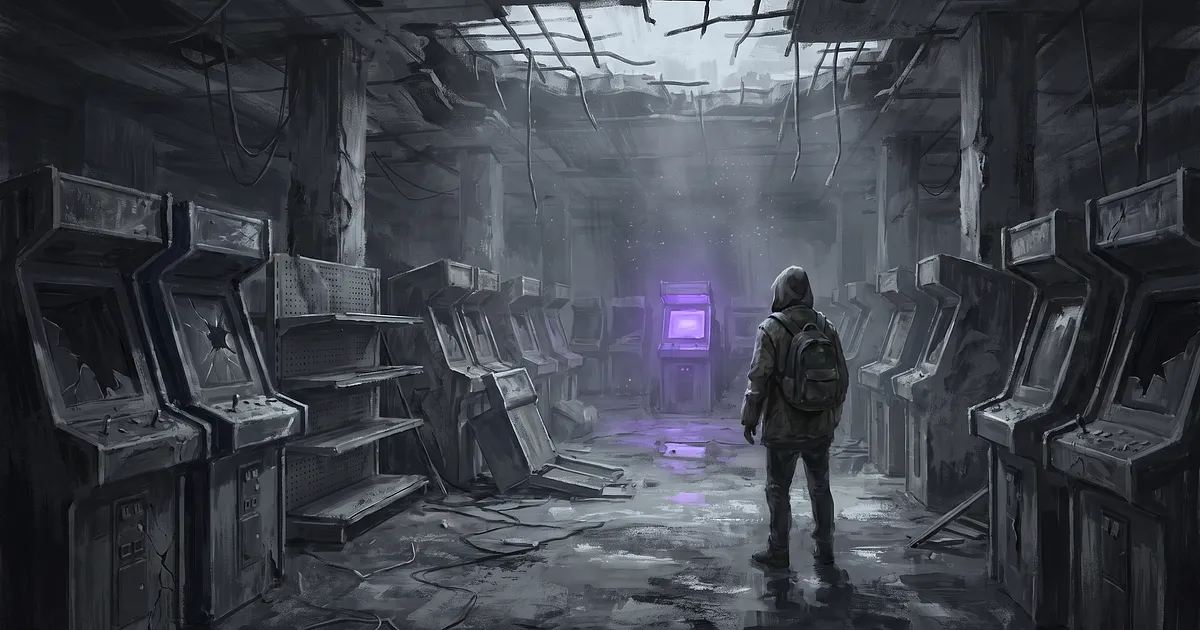
Nine out of ten web3 games are gone. Not "quiet." Not "rough cycle." Gone. That's the number at the center of the 2026 GameFi collapse, and if you logged into a crypto game, you're in the survivors' corner of an empty room.
What the 90% actually counts
Nearly all the web3 gaming statistics trace to one document. Caladan's report, published by CoinDesk on 23 April 2026, found more than 90% of web3 games failed after roughly $15 billion flowed in since 2022. Token values are down about 95% from 2022 peaks.
Caladan's line: "capital was destroyed at every layer simultaneously." VCs, NFT buyers, guilds, tap-to-earn schemes. The demand figure stings more. Only around 12% of gamers had ever tried a crypto game.
What actually caused the GameFi collapse
The money left first. DappRadar's data, reported by crypto.news in April 2025, had web3-gaming investment falling 71% quarter over quarter to $91 million in Q1 2025, most of what survived went into infrastructure, not game studios. That's a different window than Caladan's, don't conflate them.
Then web3 games shutting down became routine enough to read like a roll call. Yield Guild Games sunset its publishing arm in July 2026, cutting 35 jobs, Gabby Dizon calling it "a market decision, not a product decision." A month later Proof of Play, $33 million raised, wound down, saying it "was unable to build a product and a sustainable business."
Funding size predicts nothing. This is the industry-wide GameFi collapse picture, not the single-game autopsy, our Axie Infinity crash timeline.
The survivor's checklist
Five checks. None need you to ape in and trust a roadmap.
1. Revenue that isn't the token
Does it earn money like a normal game? Cosmetics. Season passes. Marketplace fees, maybe a subscription. CryptoGazette's April 2026 survivors-versus-zombies breakdown puts non-token revenue first. Token that only rises on new buy-ins? You know what that is.
2. A dev team that still ships
Public commits. Dated patch notes. Pixiland and Forgotten Runiverse went dark on Ronin two weeks apart in January 2026, per BitPinas's shutdown tracker. Cadence dies before the announcement.
3. Wallets, direction of travel
Nobody expects a chart to only go up. What matters is a floor, not a slope. And a wallet isn't a person, so that number probably flatters everything.
4. Can you verify anything yourself?
When you lose a match, can you check why, or take the operator's word for it? Provably fair means you can check the math yourself. See what provably fair means and how to verify a result yourself.
Stellarch, the browser TCG we cover, resolves combat through a deterministic seeded RNG, so a match replays byte-identically from its seed and anyone can re-run it. It's in closed alpha with a waitlist, worth saying plainly. For more in the same no-download, low-commitment lane, see the best browser-based crypto games.
5. How they talk when it goes bad
YGG and Proof of Play both announced: dates, reasons, two games handed back to devs. Compare that to a Discord quiet for six weeks. Runway trouble, a thinner team, a wind-down notice. The ones that vanish never warn you.
Fail three or more and the honest move is to write off your hours and tokens, sunk in the GameFi collapse. Was it a rug going in? That's covered in 7 red flags before you ape into a crypto game, and so is whether a game respects your time and wallet.
Frequently Asked Questions
Is web3 gaming dead in 2026?
No, but the GameFi collapse cull was brutal. More than 90% of projects have failed since 2022, per Caladan's April 2026 report via CoinDesk. That's a wipeout.
What percentage of web3 games have shut down?
More than 90%, per the Caladan report CoinDesk published on 23 April 2026. It measures project-level failure across the roughly $15 billion that went into the sector since 2022.
Why did so many web3 games fail?
Caladan's framing: capital was destroyed at every layer simultaneously, hitting VCs, NFT buyers, guilds, tap-to-earn projects. The deeper problem was demand: only around 12% of gamers had ever tried a crypto game.
How can I tell if my web3 game is shutting down?
Watch for income that depends only on token price, a stalled release cadence, a falling wallet trend, and quiet comms. Studios that fold shrink first, the orderly ones post a dated notice.
Are any web3 games still worth playing?
Some, yes. Two questions cut through the noise fastest: does it earn money that isn't its own token, and can you check the outcome yourself instead of taking the operator's word for it? Everything else is roadmap talk.
Sources
- Caladan's report, published by CoinDesk on 23 April 2026 coindesk.com
- DappRadar's data, reported by crypto.news in April 2025 crypto.news
- sunset its publishing arm in July 2026 cryptotimes.io
- wound down incrypted.com
- CryptoGazette's April 2026 survivors-versus-zombies breakdown cryptogazette.com
- BitPinas's shutdown tracker bitpinas.com